Difference between spermatogenesis and oogenesis
What is the major difference between spermatogenesis and oogenesis quizlet?
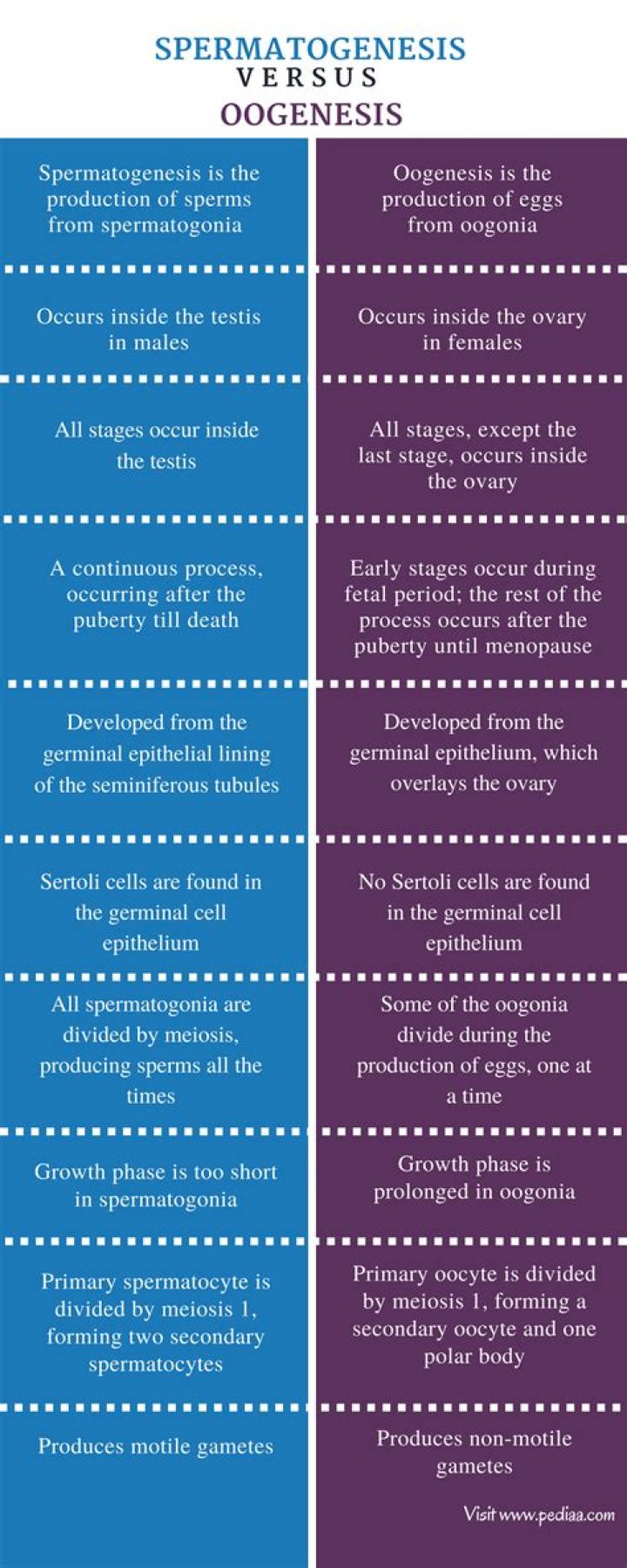
The basic difference between spermatogenesis and oogenesis is that: one mature ovum is produced in oogenesis, and four mature sperm are produced in spermatogenesis. one mature ovum is produced in oogenesis, and four mature sperm are produced in spermatogenesis.What are two differences between meiosis for spermatogenesis and oogenesis?
Spermatogenesis occurs continuously, and all spermatogonia undergo meiosis, producing sperms all the time. Oogenesis occurs for one egg cell at a time, and some cells might require many years to reach maturation. Spermatogenesis forms millions of sperms every day. Oogenesis releases one ovum per month.Which of the following best describes the difference between spermatogenesis and oogenesis?
Which of the following correctly describes a difference between spermatogenesis and oogenesis? Spermatogenesis results in four mature sperm cells, while oogenesis results in one mature egg cell. the process of forming sperms and eggs.What is difference between spermatogenesis and Spermiogenesis?
The main difference between spermatogenesis and spermiogenesis is that spermatogenesis is the formation of sperm cells whereas spermiogenesis is the maturation of the spermatids into sperm cells. Spermiogenesis, on the other hand, is the final differentiation and maturation process of the spermatids into sperm cells.What are 3 differences between spermatogenesis and oogenesis?
Spermatogenesis leads to the formation of sperms, whereas oogenesis helps in the formation of ova. The fertilization of sperm and ova leads to the formation of a zygote which further develops into an embryo.Spermatogenesis vs Oogenesis.
| Spermatogenesis | Oogenesis |
|---|---|
| Produces motile gametes | Produces non-motile gametes |
How long is the process of spermatogenesis in humans?
Spermatogenesis in the human male takes about 74 days. Spermatogenesis is regulated by intrinsic and extrinsic factors. Not all spermatogonia mature into spermatozoa – most are eliminated and phago- cytosed in a process called apoptosis.Why is spermatogenesis difficult?
However, developing a comprehensive understanding of the cell biology and genetics of spermatogenesis is difficult for most species because it occurs within a complex testicular environment characterized by the intimate association of developing sperm with accessory cells.What happens after spermatogenesis?
Spermatogenesis is the process by which haploid spermatozoa develop from germ cells in the seminiferous tubules of the testis.Stages.
| Cell type | two secondary spermatocytes |
|---|---|
| ploidy/chromosomes in human | haploid (N) / 23 |
| DNA copy number/chromatids in human | 2C / 2×23 |
| Process entered by cell | spermatidogenesis (meiosis II) |
What are the factors affecting spermatogenesis?
3.Factors that directly affect human spermatogenesis- 3.1. Obesity. Obesity has become one of the most studied health problems in the recent years.
- 3.2. Diabetes.
- 3.3. Environmental chemicals.
- 3.4. Varicocele.
- 3.5. Genetic factors.